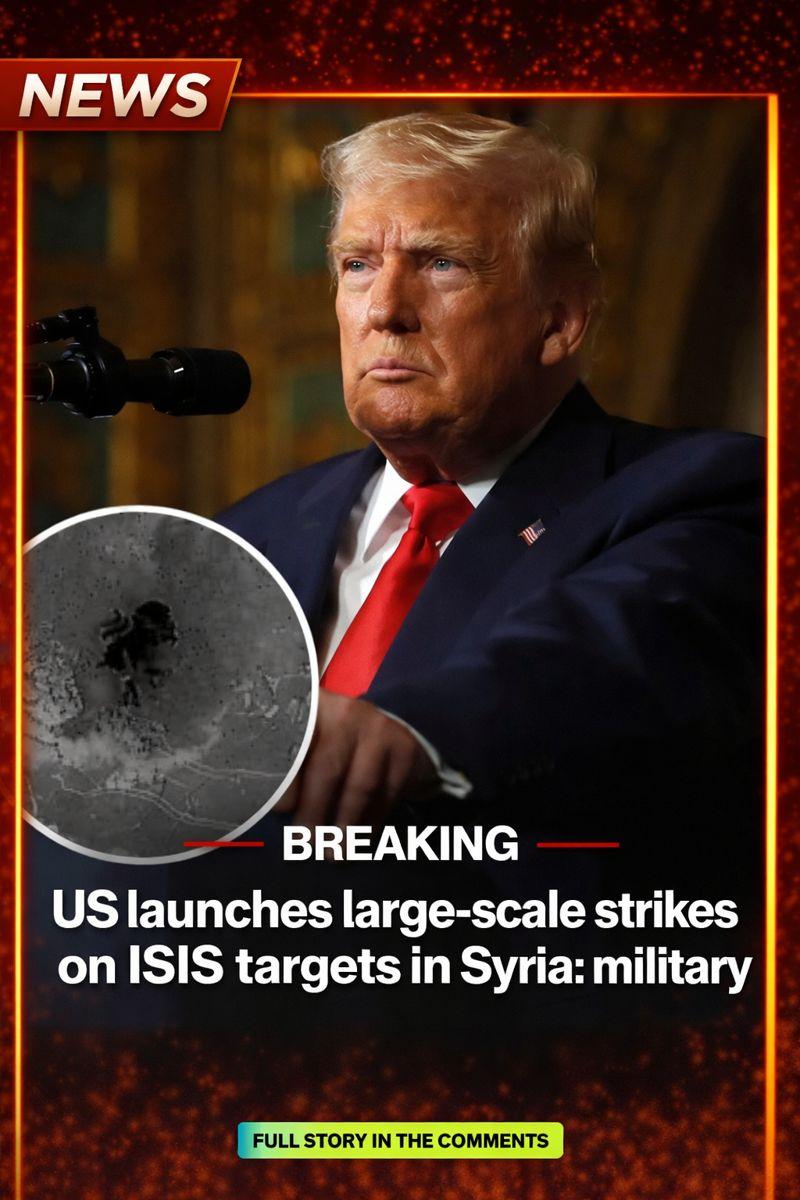
US launches large-scale strikes on ISIS targets in Syria: military

The bombs were the first to fall. Following that was the handshake. As U.S. warplanes targeted ISIS positions throughout Syria, the Trump administration discreetly altered its approach, initiating diplomatic communications with Damascus and removing long-standing sanctions.

Proponents characterize this action as a courageous reset. Detractors label it a perilous betrayal. In just one day, U.S. policy transitioned from isolation to engagement, from punitive measures to negotiations.

The airstrikes enabled Washington to demonstrate its strength, reinforcing the notion that American military might continues to influence events on the ground. ISIS strongholds were severely impacted, and the White House underscored its determination and deterrent capabilities.

However, behind closed doors, a contrasting message surfaced. A meeting between U.S. envoy Tom Barrack and Syria’s new leadership indicated a readiness to explore diplomatic avenues, despite years of animosity and condemnation.


The lifting of sanctions was presented as “providing Syria an opportunity.” The administration contended that economic pressure had not succeeded in effecting change and that conditional engagement might foster reform and stability.

For Syrians who have suffered through years of conflict, this decision holds significant implications. Relief from sanctions could pave the way for reconstruction and humanitarian aid—or further entrench a regime that critics argue is still associated with oppression and abuse.

In Washington, opinions on this move are polarized. Some view it as strategic pragmatism aimed at counterterrorism and regional equilibrium. Others caution that it risks legitimizing a government many still blame for widespread suffering.

History will ultimately assess this gamble. The policy shift could either contribute to stabilizing a fragmented region or serve as a cautionary tale of moral compromise. For the moment, Syria finds itself at a crossroads defined by bombs, negotiations, and uncertain commitments.

Leave a Reply

Your email address will not be published. Required fields are marked *